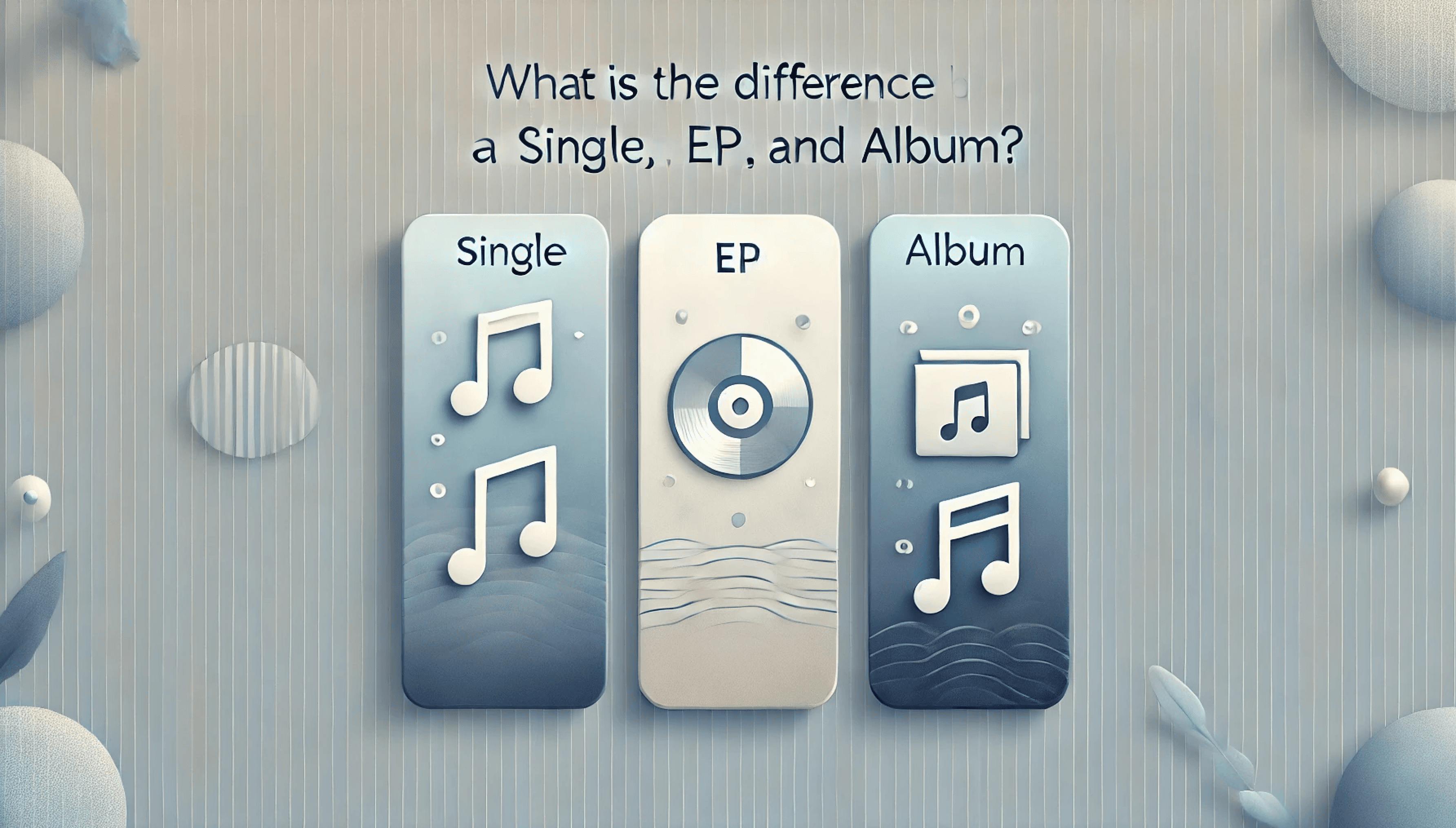
What is the difference between a single, EP and album?
You may have noticed in your music distributor that you can't typically select ‘single', ‘EP' or ‘album' for your release. The streaming services categorize singles, EPs and albums automatically. But how do they decide? The track counts for singles, EPs and albums on Spotify, Apple Music and other DSPs are: There are some other interesting...
By Andrew Southworth
On this page
Music Marketing Monday
Get the next practical music marketing idea.
Join 18,000+ artists, managers and labels receiving actionable advice every Monday.
You may have noticed in your music distributor that you can’t typically select ‘single’, ‘EP’ or ‘album’ for your release. The streaming services categorize singles, EPs and albums automatically. But how do they decide?
The track counts for singles, EPs and albums on Spotify, Apple Music and other DSPs are:
- Single: 1-3 tracks
- EP: 4-6 tracks
- Album: 7+ tracks
There are some other interesting caveats that define a single, EP and album – so read on!
What does Spotify consider a single?
Spotify, Apple Music and other DSPs consider a single to be 1-3 songs. However, if one of the tracks is over 10 minutes long it will be considered an EP. Or if the total running time is over 30 minutes it will be considered an album.
Most of the time a single will just have 1 song on them. The exceptions are when an artist releases an alternate version of the song alongside the main, or a different song that fits well with the main song.
How many songs for an EP?
Music streaming platforms consider an EP to be 4-6 songs, as long as the total running time is less than 30 minutes. Additionally a release can have 1-3 songs and still be an EP if one track is at least 10 minutes long.
Often the ‘spirit’ of an EP is to release a batch of songs that fit a specific artistic vision too long for one song, but too short for an album. Most EPs nowadays are due to artists waterfall releasing songs and hitting 4-6 tracks and not due to an artistic vision – so it’s an EP in definition but not in tradition.
What do streaming services consider an album?
Anything with either 7+ tracks, or has more than 30 minutes of content, will be considered an album by streaming services.
Historically albums are the main way an artist releases music, but this was due to the physical nature of purchasing CD’s, cassettes and vinyls. With streaming, singles have become much more common. Nowadays artists use albums as a way to group related songs into a body of work, or as a way to ‘define an era’ and group a bunch of singles together into a package.
For more information, check out this article by DistroKid and this one by CD Baby.
Should I release a single, EP or album?
Typically singles are most common nowadays. It’s become common for artists to release a new song every 4-8 weeks (7-13 releases per year), while in the past artists might have 2 releases per year. Releasing more singles more frequently allows artists to keep people interested, and always have something to promote and talk about.
A 12 song album might only have 3 new songs on it because 9 songs were already released as singles. If you were to release that 12 song album without any singles, so every song is new, Spotify will make you choose 1 song to pitch to editorial and submit to Release Radar. By releasing more singles you get more pitches to editorial and more pushes in release radar.
Make better decisions from your royalty data
Use the free DistroKid analyzer to inspect streams, revenue, territories, and release performance without uploading data to a server.
Useful next steps
Put this into practice
Spotify Growth Machine
A structured system for turning release strategy, Meta ads, and streaming data into repeatable growth.
Explore the courseSpotify Deep Link Generator
Create Spotify links that open in the right playlist context for ads, emails, and smart-link flows.
Open the toolDistroKid Royalty Analyzer
Inspect royalty exports locally in your browser and spot revenue patterns faster.
Analyze royaltiesKeep exploring